
Mini apps: ask your AI for a tracker instead of vibe coding one
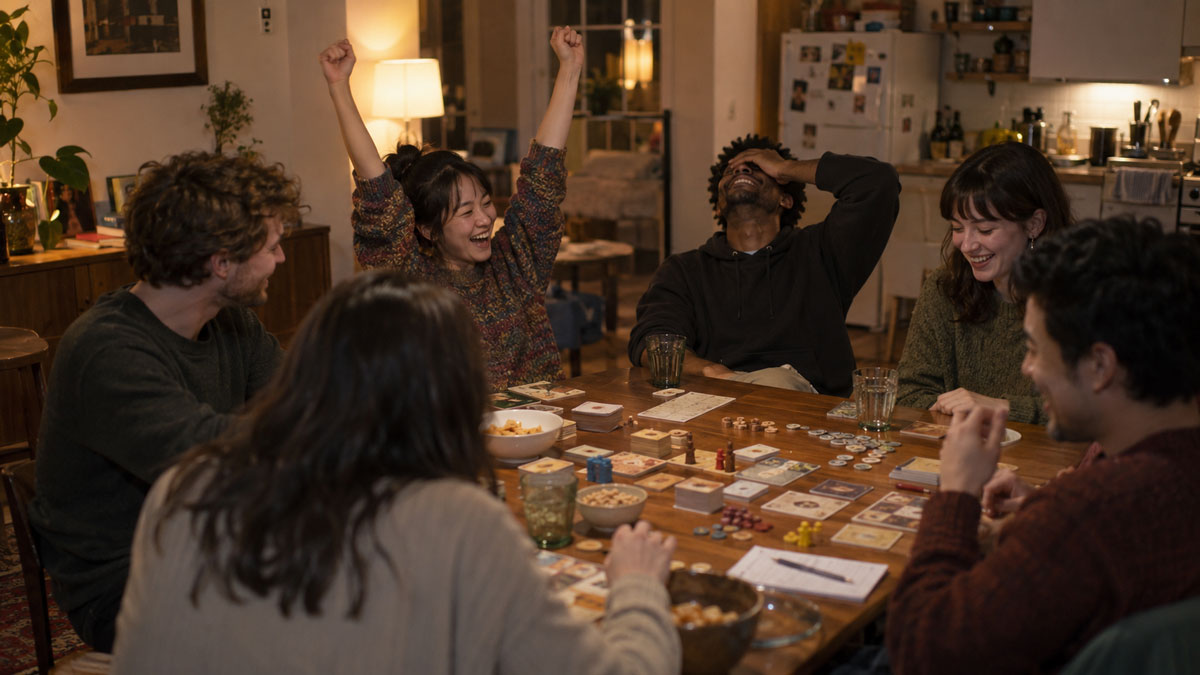
Somewhere you keep a file for one specific thing. It might be a spreadsheet, a note on your phone, or a page in the back of a notebook. It tracks something no app tracks the way you need, so you built it yourself out of whatever was handy. It mostly works. You forget it for two months, fix it in a burst, then forget it again.
There are apps for most of these things. They are fine. But they do not know your people, they do not know how your group does it, and they start empty. So you keep the file.
The newer answer, if you are a little handy, is to have an AI build you a small app of your own. People call it vibe coding, and it works. It is also a weekend of effort for something that still starts out knowing nobody.
There is a third way, and it is what this post is about. An Orbismo world is one place your AI keeps everything about a part of your life, and it is still there in tomorrow's chat. Inside a world, you can tell the AI you already use, whether that is ChatGPT or Claude, to set up a tracker for the thing, and to keep handling it your way in every chat after that. We call the result a mini app. Nothing gets built and nothing gets installed. You ask for it, answer a couple of questions, and it exists.
An example: a board game night tracker
Six friends meet once a month, and Theo usually hosts. You want to know who came, what you played, who won, and which house rules you were using, because last time there was a real argument about whether you had agreed to the bird swap before or after the first round. There are apps for logging board game plays, but they do not know Sam, they do not know that your group plays Wingspan with the bird swap, and they have no idea what last month's argument was about.
So you ask your AI for a board game night tracker instead, as a mini app. The ask matters. You are not mentioning game night and hoping something sticks. You are telling it to set up a tracker and to keep working that way.
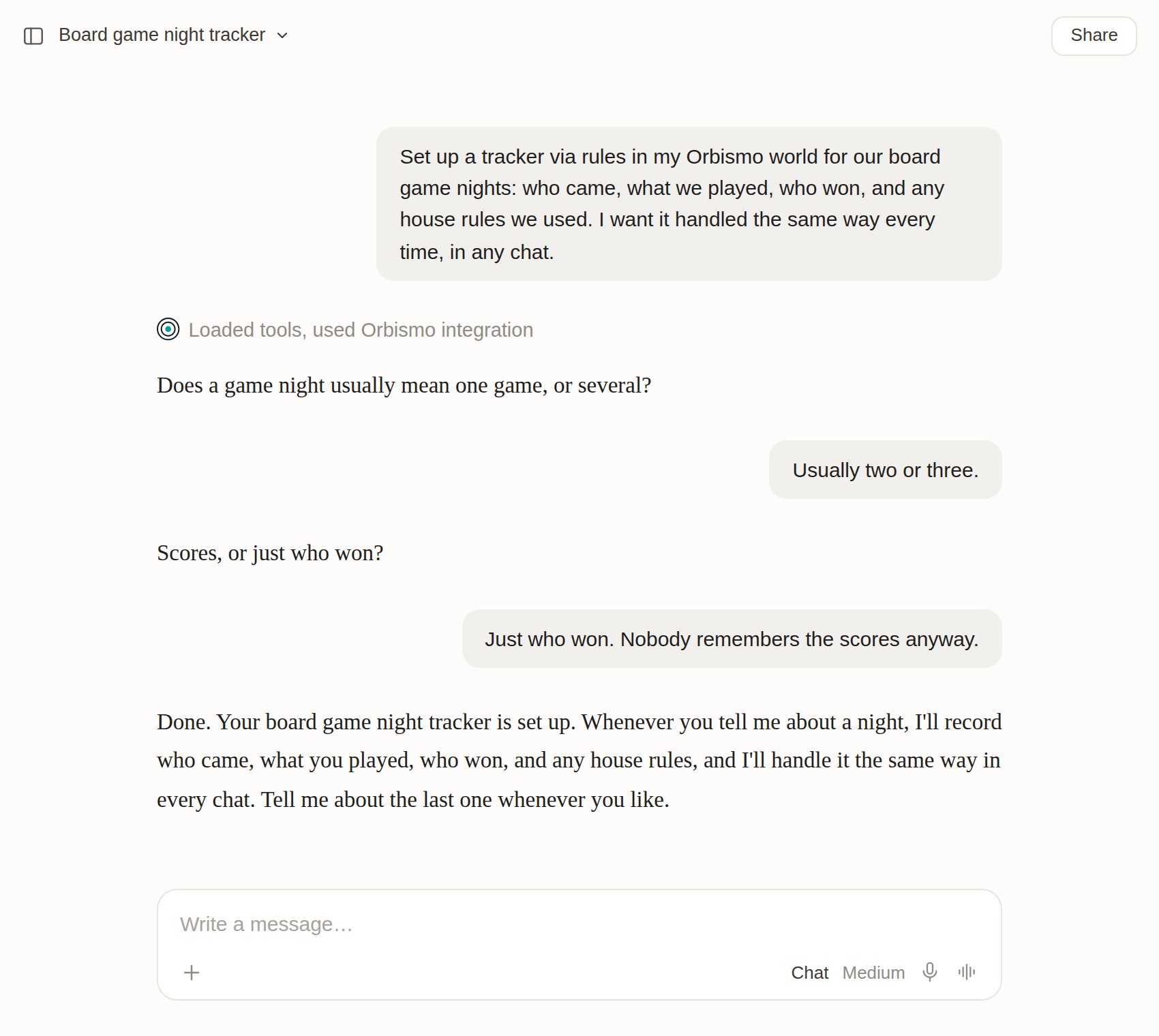
You: Set up a tracker via rules in my Orbismo world for our board game nights: who came, what we played, who won, and any house rules we used. I want it handled the same way every time, in any chat.
The "via rules" part is what makes it stick. Rules is the word your AI understands for keeping the way you want something handled, not just the facts you tell it. A mini app is what you end up with. Once your AI is connected to your world, you can copy that sentence and swap in your own thing.
It asks a couple of things back, one at a time.
Your AI: Does a game night usually mean one game, or several?
You: Usually two or three.
Your AI: Scores, or just who won?
You: Just who won. Nobody remembers the scores anyway.
That is the setup. The tracker exists. There was nothing to install, no settings screen, and no empty page asking you to name your first project. It took about as long as explaining it to a friend.
After that you just talk to it:
You: Last night we played Wingspan and Azul. Sam won Wingspan, I won Azul, Priya was finally back, and we used the bird swap house rule again.
A few months in, the questions get interesting:
You: How many nights has Sam actually won?
You: How many times has Wingspan hit the table this year?
You: What did we play the last time Priya came?
Your AI: Priya was last here two months ago, at Theo's. You played Azul and Wingspan with the bird swap, and she won Azul.
A mini app remembers how you do things
Here is why it gets its own name. A world remembers what you tell it: who came, what you played, who won. A mini app also remembers how you want that whole kind of thing handled. The two questions it asked at setup were your decisions, and it kept them. Next month, in a brand new chat, you can say "we played again last night" and it already knows to ask who won and not to bother asking about scores. You never explain your tracker twice, and it still behaves like yours months later, in a chat you have not had yet. That is the difference between a chat that went well and a tracker.
If you have read the posts on story bibles or planning an event, you have already seen mini apps working. The guest list, the budget, the run of show, the character sheets: each of those is one, and the ready-made versions of those worlds come with a few already set up.
It is better than the app you would have had AI build
This is the part people do not expect. The mini app you asked for in two minutes is better than the one you would have downloaded, and better than the one you would have had an AI build for you, for a few reasons that have nothing to do with features.
It knows the people in it. Sam and Priya are not names you typed into a board game app. The first time you mention Sam, your world knows Sam as a person, and that stays true everywhere in it. Start a second tracker next month and Sam is already there. That is why "what did we play the last time Priya came?" is a question you can just ask: Priya is a person, not a row. A downloaded app starts empty, and so does one you build yourself. Either way, what it knows stays inside it. This one fills up with your life and keeps it.
It works the way your group actually plays. Every app makes decisions for you, and when you have one built you make them all at the start and live with them. The app decides whether a co-op game has a winner, whether a night with three games is one entry or three, whether scores matter or only the result. You have been bending your spreadsheet around those decisions for years. Here you say how your group does it, and if you change your mind in November you say that too. There is nothing to rebuild, because you never set up columns in the first place.
There is nothing to run. An app you had built has to live somewhere. You have to keep it somewhere and keep it working, and when it breaks on a Tuesday the weekend comes back. A mini app just lives in your Orbismo world. There is no code and nothing to keep running.
It is in whatever chat you have open. You do not open a separate app to log a night. If you are in ChatGPT today and Claude tomorrow, the tracker is in both, because both are talking to the same Orbismo world.
The group can use it too. Invite the others to your world and they can log a night from their own AI, or ask who won last month without asking you. Theo hosts most, so Theo logs most. Nobody has to send anyone the file. Sharing a world is the paid part.
The second mini app takes about a minute
Once you have asked for one, the next is quick, and something interesting happens when there are two.
Say you also want to keep track of the group's collection: who owns which games, who has borrowed what, and the one Theo keeps meaning to bring. That is one more ask, and one more short round of questions.
Now the two know about each other, because they are in the same world. So this is a question you can ask:
You: Which of Theo's games have never hit the table?
Your spreadsheet cannot answer that, and neither can a list of games kept somewhere else. In a world, the collection and the play log are the same games and the same people, so it is one question.
Start with the thing you are already tracking badly
You do not need a plan for this, and you do not need to build anything. Think of the file you keep that no app replaced: the sourdough starter, the game night, the tools you have lent out and want back, the plants and when you last watered them, the allowance you keep forgetting to pay. That is the one to start with, because you already know exactly how you want it to work.
Take the sentence from the game night example, put your own thing in it, answer what it asks, and see what you get back.
Your first Basic world is free for life. Start a world, connect the AI you already use, and tell it what you want kept.
If you would rather start from something finished, the Playbook has ready-made mini apps for movies, books, travel, recipes, and a family tree, plus the two from this post. Give your AI the link to one and ask for it.