
What is a world your AI remembers?
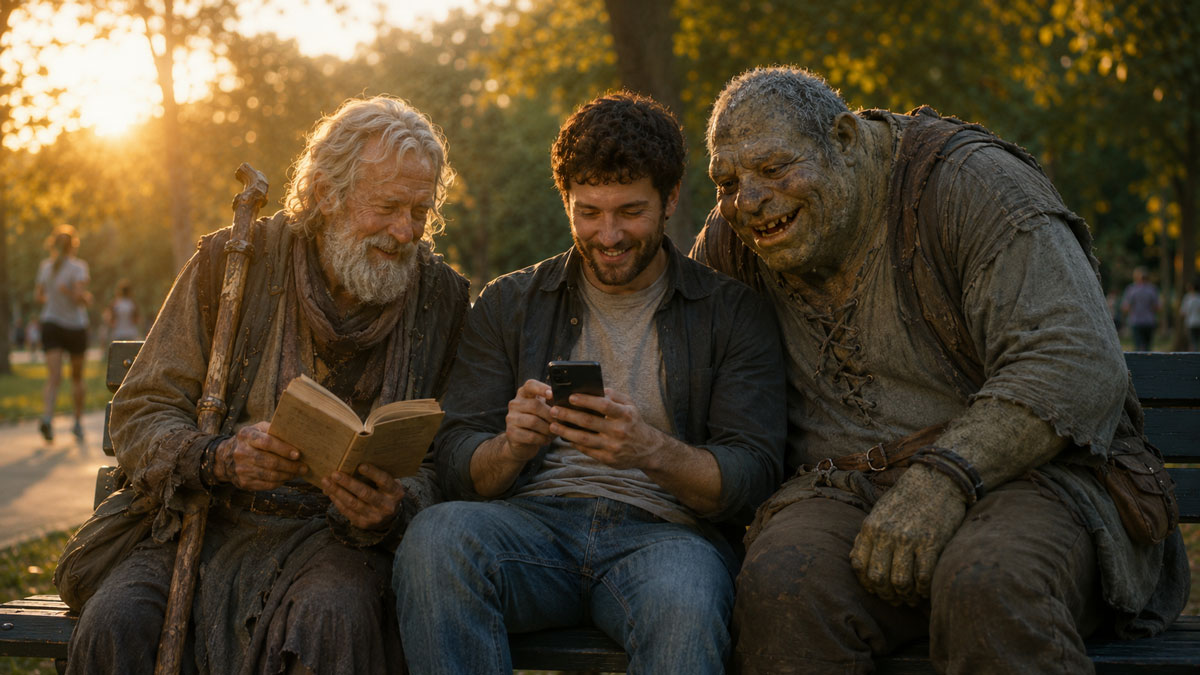
If you use AI for anything bigger than one conversation, you know the feeling. You spend an hour telling Claude about your novel: the characters, the feuds, the city where it all happens. Tomorrow, in a fresh chat, none of it exists.
This amnesia happens with everything that matters over time. The campaign you run for your friends. The wedding you are planning. The family history you are piecing together, one relative at a time. Your AI is brilliant in the moment, and a total stranger the next morning.
Orbismo fixes this by giving your AI a world.
A world is a place, not a chat
A world is one living record of everything in a project: the people, the places, the events, and how they all connect. It lives in Orbismo, outside any single conversation.
Connect a world to the AI you already use (Claude and ChatGPT both work) and your AI can finally remember. Take the thriller you are writing: Dr. Okonkwo runs the Lagos lab, and only she knows the yield numbers are faked. That secret is saved into your world, tied to her, the lab, and her estranged brother Tomas, who could bring it all down. Next week, in a brand new chat, ask "who could expose the fraud?" and your AI just knows.
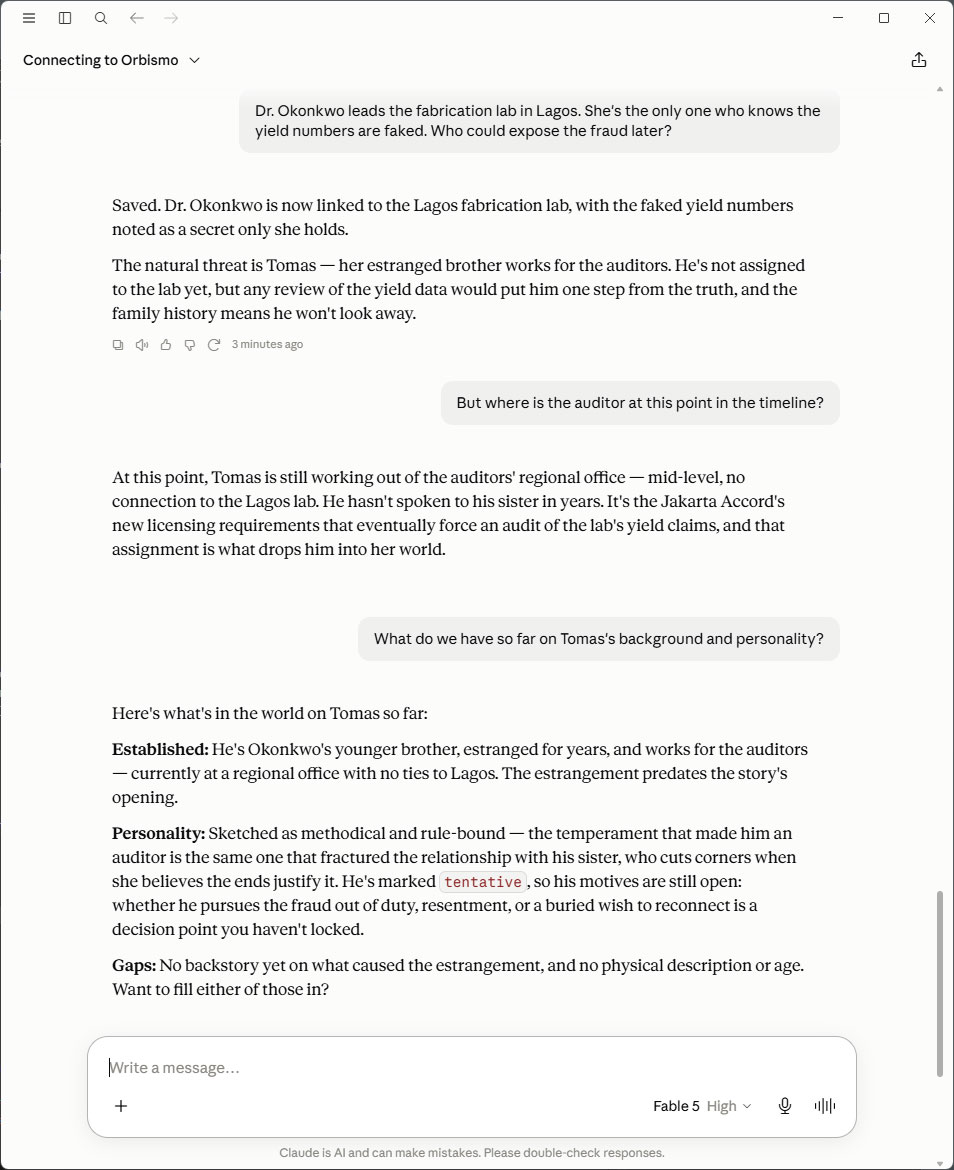 Every detail is saved to your world as you talk, ready whenever you ask.
There is no new chatbot to learn and nothing to migrate. You keep talking to your AI the way you already do. The world quietly fills in behind the conversation.
Built by talking, not typing
You never fill out a form. You describe things naturally, in any conversation, and your world takes shape on its own: people get linked to places, events land on a timeline, details attach to the right characters.
When you want to see it all, open your world in Orbismo. Everything your AI has learned is laid out to browse and search: every person, every place, every connection. It is one living canon of your project, and it grows every time you talk.
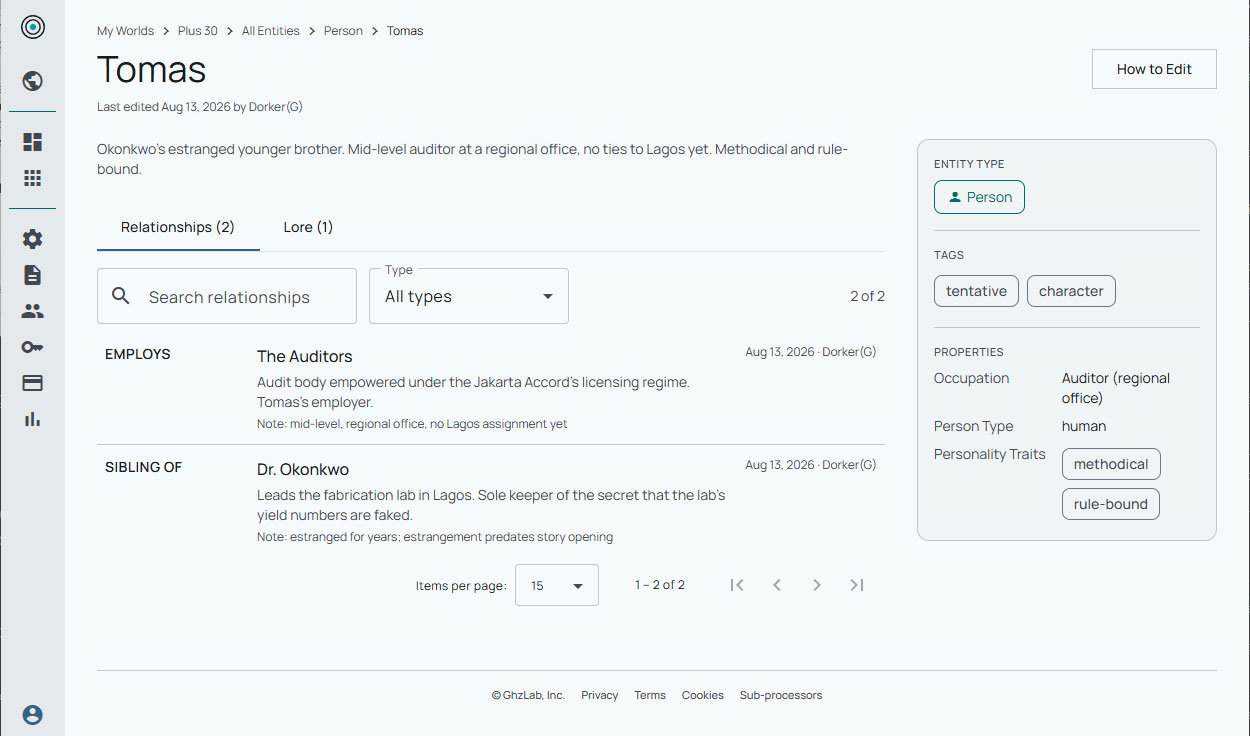 Everything your AI has learned, laid out to browse.
Isn't this just AI memory?
Not quite. The memory built into a chatbot is automatic and invisible. You do not choose what it keeps, you cannot really browse it, and it stays locked inside that one app.
A world is deliberate and yours. You can see everything in it. It travels with you across tools, so the world you build talking to Claude is the same world ChatGPT reads tomorrow. And you can invite other people into it: your co-writer, your players, your partner, each with their own AI reading from the same source of truth.
 One world. Everyone you invite sees the same thing, and so does their AI.
What people build worlds for
- A story bible for a novel, so characters stay consistent from draft one to draft nine.
- A campaign world, so the game remembers every ruin your players looted and every promise they broke.
- A wedding, with guests, vendors, venues, and timelines in one place both partners can see.
- A family history, where every relative, date, and story stays connected.
- Your own life: the projects, trips, and people you talk about with your AI every day.
Some of these are classic worldbuilding. Most of them are just life. Either way, the idea is the same: everything about it, in one place your AI knows.
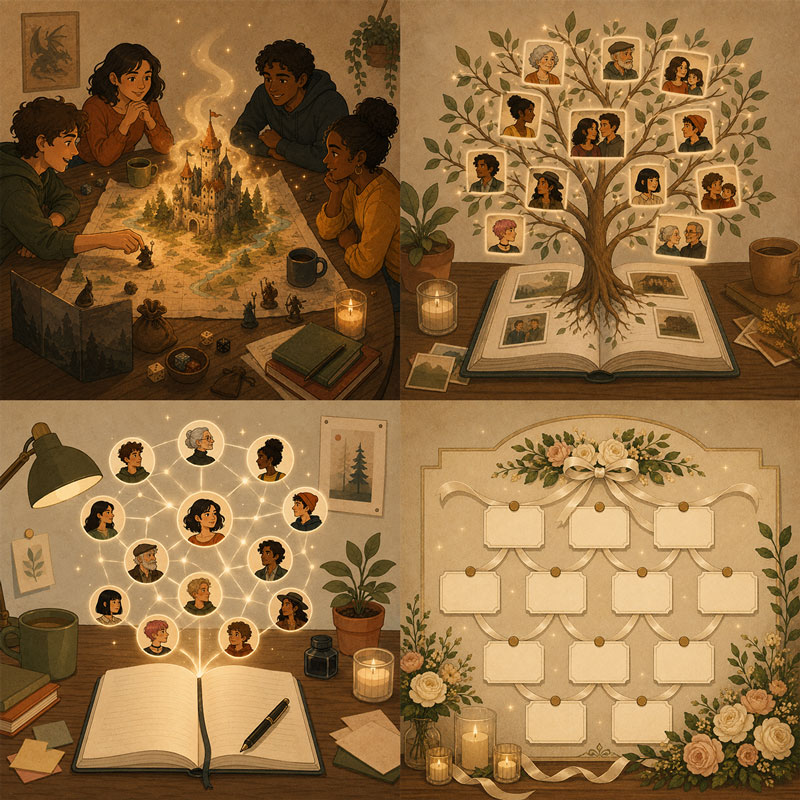 From novels to weddings, every project works the same way.
Start with a free world
Your first Basic world is free for life. No credit card, no trial clock. Create a world, connect the AI you already use, and start talking.
Build a world your AI remembers. Create your free world
Questions? We are at orbismo.com/support.